
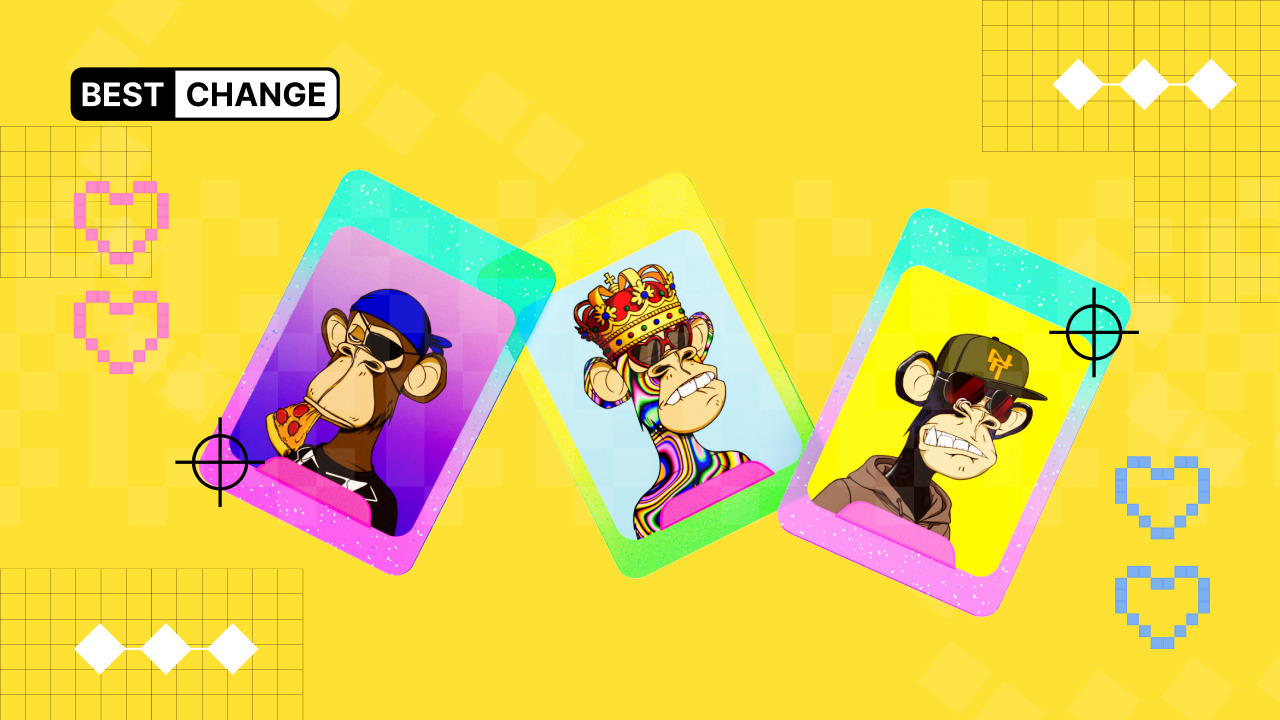
NFTs have long ceased to be a niche tool for digital artists: today, they cover the gaming industry, entertainment, medicine, real estate, and many other fields.
What are NFTs used for?
An NFT (Non-Fungible Token) is a unique digital object recorded on the blockchain. An NFT cannot be changed, deleted, or counterfeited. Because of this, each token has a verified history of origin and ownership, making NFTs a reliable way to confirm property rights to digital objects.
NFTs can represent both digital and real objects. These include images, animations, videos and films, music tracks and podcasts. Game characters and items, digital tickets, documents, and various certificates can also exist in NFT format. In addition, non-fungible tokens are used to record rights to artworks and even real estate.
The peak of NFT popularity occurred in 2021–2022, when the total market capitalization reached $16.8 billion. After the 2022 crisis, interest in NFTs declined, but by the end of 2024, the sector began recovering again. As of October 2025, its valuation is around $5 billion.
How to create an NFT, and is it difficult?
Step 1. Develop your NFT concept and prepare the content
The first step is to decide which digital object will become your NFT. Almost anything works:
- images, art, photos, memes;
- videos of any format — from shorts to films;
- music, podcasts, audiobooks;
- in-game items, avatars, skins;
- documents and digital rights.
For beginners, working with images is the easiest. You can create your own meme, a series of pictures, or a themed collection.
Note: Even without design or digital illustration skills, you can create quality content for an NFT. Modern neural networks — Midjourney, DALL·E, Stable Diffusion — help with this. They allow you to generate images of any genre and style using just a text prompt.
Step 2. Choose a blockchain and a platform
Before creating an NFT, it's essential to select the right blockchain, because minting an NFT requires paying a transaction fee — the so-called gas. In different networks, this cost varies significantly. For example, minting an NFT in Polygon, BNB Chain, Solana, and TON is much cheaper than on the more congested and expensive Ethereum.
You can easily compare current fees via blockchain explorers — Etherscan, BSCScan, Solscan, Polygonscan, and TONScan.
Creating NFTs without programming is easiest through major marketplaces:
- OpenSea
- Rarible
- Magic Eden
- Getgems
- Zora
Keep in mind that most NFT marketplaces support multiple blockchains. For example, OpenSea supports Ethereum, Solana, and more than two dozen other networks, while Magic Eden allows minting NFTs on Ethereum, Solana, Base, Arbitrum, and even on the Bitcoin blockchain.
Before creating an NFT, you need to connect a crypto wallet:
- for Solana — Phantom;
- for Ethereum and EVM networks — MetaMask, Trust Wallet, Zerion.
After connecting your wallet, the next step is deploying a smart contract. This is the process of publishing the contract on the blockchain, making it a part of the network. The contract acts as the "framework" for the NFT — it defines the rules for token creation, uniqueness, rights transfer, and further operations.
You can do this without deep technical knowledge: many major platforms, including OpenSea, offer built-in tools that automatically deploy a smart contract. The user only needs to choose the parameters of the future collection, and the system creates and deploys the contract on the blockchain.
Step 3. Upload the content and configure the NFT
Once the idea is ready, the content is created, the wallet is connected, and the platform is chosen — you can move on to minting the NFT.
First, upload the original file in one of the supported formats. For images, JPG or PNG is typically used; for video, MP4; for audio, MP3 or WAV. Some platforms also allow GIF animations and even full 3D models.
After uploading the media file, you can proceed to create the NFT itself. At this stage, you set the name of the token or the entire collection, and optionally add a detailed description. Then you configure the attributes of the NFT: the number of copies, category, characteristics, and any additional parameters. The author can also set a royalty rate — a percentage earned from each subsequent sale of the token.
Once the files are uploaded, the platform records them on the blockchain, forming a unique entry that confirms the authenticity and authorship of the created digital asset. When this step is complete, you can proceed to selling it.
Selling and promoting your NFT
An NFT can be listed either at a fixed price or via auction. Publishing a token requires a transaction and a fee payment, the amount of which depends on the current load of the selected network.
To speed up sales, it's essential to promote your collection and build an audience around it actively. You can:
- maintain a Telegram or Discord channel, regularly sharing news and behind-the-scenes content;
- post teasers, previews, and creation stories on social media;
- mention your project on forums, in themed chats, and NFT communities;
- engage with collectors, participate in discussions, and build your author reputation;
- collaborate with NFT influencers and bloggers for reviews or mentions;
- run giveaways, drops, and early access for subscribers;
- list the collection on multiple marketplaces, if the platform rules allow it.
- create supplementary materials — concept art, stories, expanded collection lore* — to increase audience engagement;
- participate in X (Twitter) Spaces, AMA sessions, and online events;
- set up advertising on social networks or crypto platforms, if budget permits.
* Collection lore is the storyline, background, or universe created by the author to explain the idea, origin, and meaning of the NFT project. Simply put, it's the "mythology" of the collection: characters, their roles, relationships, events, the world they exist in, and the reasons the collection was created in the first place.